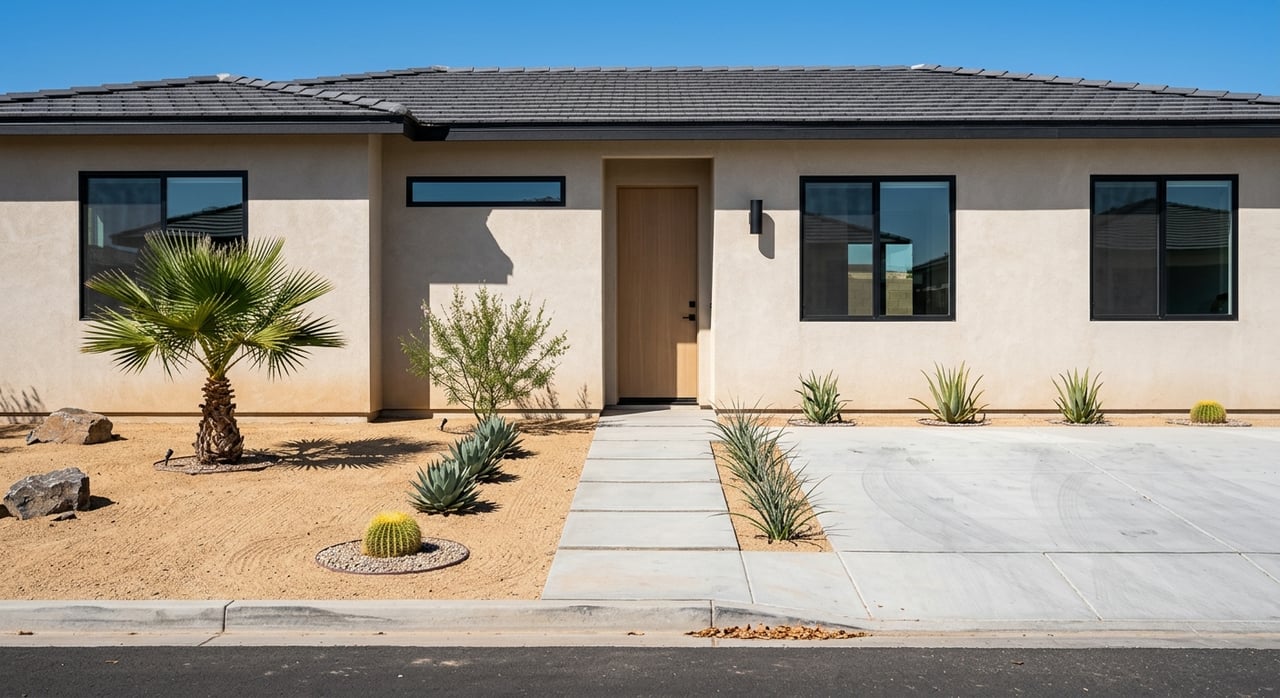
How To Price Your Tempe Home Using Real Comps
May 21, 2026
May 21, 2026
Wondering why one website says your Tempe home is worth one number, while another suggests something completely different? You are not imagining the gap. In Tempe, pricing a home well takes more than a citywide average or an automated estimate. It takes local comps, careful adjustments, and a clear read on your neighborhood. If you want to price your home with more confidence and less guesswork, this guide will show you how. Let’s dive in.
Tempe is active, but it is also price-sensitive. In April 2026, the local MLS-based market update showed single-family homes at a median sales price of $553,750, with 52 days on market and 98.1% of list price received. Townhouse and condo properties showed a median sales price of $335,000, with 82 days on market and 97.5% of list price received.
That split matters. If you price a condo using single-family trends, or use a broad city number without looking at property type, you can miss the market. Buyers compare your home to similar options, not to every home in Tempe.
Citywide headlines also hide what happens in Tempe’s smaller pockets. March 2026 neighborhood data showed Downtown Tempe–Rio Salado at a median listing price of $494,950 and 41 days on market, while Corona–South Tempe was at $672,000 and 33 days. Alameda came in at $469,900 and 53 days, and zip code 85288 was at $374,950 and 55 days.
The takeaway is simple: your price should reflect your micro-market, not just Tempe as a whole. That is where real comps come in.
A real comp is not just any home that sold nearby. It should be a property that closely matches your home in the ways buyers actually care about.
The strongest comps usually share these traits:
Pricing guidance from industry sources says comparable sales should have similar physical and legal characteristics, with same-neighborhood sales carrying the most weight when available. If there are not enough close matches in your immediate area, you can expand to a nearby competing area, but that choice should be explained clearly.
In plain English, a three-bedroom single-family home in South Tempe should not be priced from a dated condo sale across town just because the numbers look convenient. The closer the match, the more useful the comp.
Online estimates can be helpful as a starting point, but they are not the same as a seller pricing strategy. Automated models use large datasets, public records, MLS information, home facts, location, and market trends. They are designed to estimate value at scale.
The challenge is that public records can lag behind reality. If you updated your kitchen, replaced flooring, added a new HVAC system, or improved the backyard, an automated model may not fully reflect those changes right away. It also may not understand the difference between one Tempe pocket and another as well as a local comp-based review can.
That is one reason numbers vary. In spring 2026, one source reported a Tempe median listing price of $499,000, while another showed an average home value of $468,328, and the local MLS-based report showed different median sales prices by property type. These are not necessarily contradictions. They reflect different datasets, definitions, and time windows.
For sellers, the lesson is clear: an online estimate is a starting point, not the final answer. A tailored valuation should be built from recent sold comps, current competition, and your home’s actual condition.
Begin with homes that have sold recently in your neighborhood and match your property type. If you own a townhome, look first at townhomes. If you own a single-family home, stay in that lane unless there is a very strong reason to expand.
Recent sales matter because the market changes. Older comps can still be useful, but if the market has moved since those homes sold, the numbers may need time-based adjustments.
Next, narrow your list to homes with a similar footprint and feature set. Buyers notice differences in bedroom count, bathroom count, garage space, lot size, and overall functionality.
A home with a renovated kitchen, newer windows, and updated baths may support a different price than a similar-sized home with older finishes. The goal is not to find perfect twins. The goal is to find the closest real substitutes a buyer would consider.
Condition is one of the biggest reasons prices drift apart. Two homes with the same square footage can land at different values if one feels move-in ready and the other needs cosmetic or major work.
When you review comps, ask practical questions:
This part matters in Tempe because buyers are comparing options closely. If your home does not match the strongest sold comp in condition or presentation, pricing at the very top of the range can slow activity.
Sold comps tell you where the market has been. Active and pending listings help show where the market is now.
A comparative market analysis can include sold homes, homes under contract, and active listings. If similar homes are sitting while better-priced homes are moving, that is valuable feedback. Your list price needs to make sense not only against past sales, but also against what buyers can choose today.
Tempe’s broader numbers can help you pressure-test your comp analysis. In April 2026, single-family homes averaged 52 days on market and sold at 98.1% of list price received. Townhouse and condo properties averaged 82 days and 97.5% of list price received.
Those numbers suggest buyers are active, but not careless. They are still negotiating, and properties that miss the mark may take longer to sell. When a home is priced too high, you often trade early momentum for extra market time.
Pricing is not set-it-and-forget-it. Once your home hits the market, buyer response becomes another important data point.
If showings are slow, offers are not coming in, or buyers keep choosing competing listings, your price may need to be adjusted. Market guidance consistently points to the same reality: the longer a home sits, the harder it can become to sell at the number you originally wanted.
Even thoughtful sellers can slip into a few common traps. Knowing them upfront can help you protect your timeline and your bottom line.
Tempe is not one flat market. Different neighborhoods and property types move at different price points and speeds. A broad average can be useful for context, but it should not drive your final list price.
Single-family homes, condos, and townhomes do not perform the same way. The local data makes that clear. Keep your comps within the same category whenever possible.
It is tempting to anchor to the highest recent sale. But if that home had a better location, more updates, or superior features, it may not be the right benchmark.
Buyers do not ignore deferred maintenance, dated finishes, or weak presentation. If your home needs work, the market usually accounts for it.
Overpricing can lead to price cuts later. In many cases, a sharp price from the start helps create better interest than a high opening number followed by reductions.
A professional comparative market analysis helps turn scattered information into a clear pricing strategy. It looks at sold comps, active competition, market timing, and your home’s specific features.
That local perspective matters in Tempe, where pricing can vary a lot from one pocket to the next. A neighborhood-first approach can also help explain why two homes with similar square footage may not command the same price.
Most important, a CMA gives you a reasoned range rather than a random guess. You still make the final decision as the seller, but you do it with stronger information.
If you are preparing to sell in Tempe, the smartest first step is to look at the real alternatives buyers will compare against your home. That means recent sold comps, honest adjustments, and a pricing strategy shaped by your exact neighborhood and property type. If you want a clear, local read on your home’s value, Daniel Birk can help you build a pricing plan grounded in real Tempe comps.
Stay up to date on the latest real estate trends.
Real Estate
A Real Estate Monthly Recap
Real Estate
What's Happening in The Lakes?
Get assistance in determining current property value, crafting a competitive offer, writing and negotiating a contract, and much more. Contact us today.