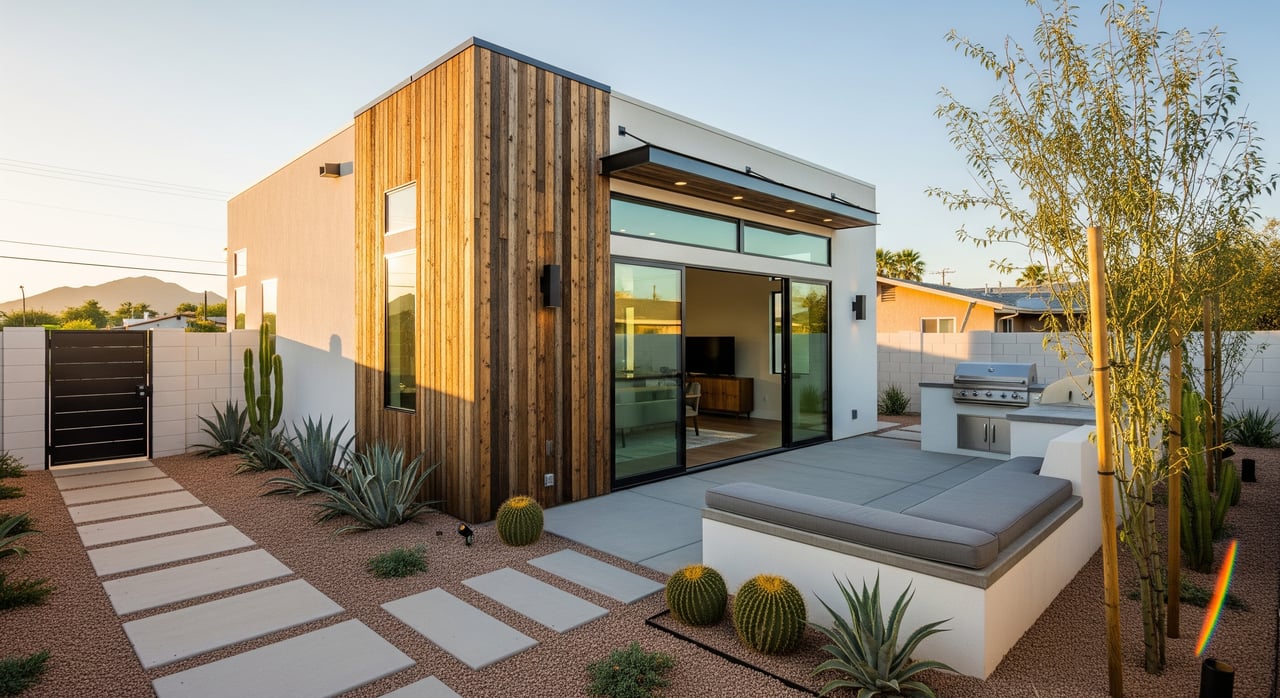
Unlocking Tempe ADU Rental Income: A Comprehensive Analysis
November 6, 2025
November 6, 2025
Are you wondering if a backyard ADU in Tempe could pay for itself, or even cover your mortgage gap? You’re not alone. With steady rental demand and limited small-unit options near ASU and throughout the East Valley, many homeowners are exploring ADUs as an income play. In this guide, you’ll learn the rules that shape feasibility, the full cost picture, how to estimate rent and expenses, and a simple ROI framework you can run with your own numbers. Let’s dive in.
Before you sketch floor plans, confirm that an ADU is allowed on your specific lot and under your intended use. The City of Tempe is your primary authority for zoning, size, and permitting. You should also check HOA rules and how a new unit may change your property tax bill.
Start by confirming that your lot’s zoning allows an ADU and which types are permitted: attached, detached, or a conversion of existing space. Ask Tempe Planning about any neighborhood overlays or historic districts that may affect exterior changes.
Cities often cap ADU size by square footage or as a percent of the main home. Setbacks and height limits will shape where a detached unit can go. These rules directly affect your rentable area and build cost, so you want them clear early.
Ask if additional parking is required for an ADU on your lot. Clarify whether the ADU must have separate meters for electric, gas, or water, or if a shared service is allowed. Parking and new meters can add meaningful one-time costs, from paving to trenching and panel upgrades.
Confirm whether Tempe requires owner occupancy of one unit and whether there are limits on short-term rentals. Some areas near ASU have stricter enforcement for STRs. Your intended use should align with city and neighborhood rules.
Even if the city allows ADUs, your HOA may prohibit them or ban short-term rentals. Review CC&Rs and get written confirmation before you pay for design work.
What you can build, how big it can be, where it can sit, and how it can be rented all influence rent potential and cost. Permit timing and required design changes also affect carrying costs and schedule risk. A short concept meeting with Tempe Planning can save weeks and prevent expensive redesigns.
ADU budgets vary widely based on size, finish level, utility work, and site conditions. A clear pro forma includes both hard construction and soft costs so you are not surprised later.
Rather than guessing, get two to three local contractor estimates and at least one architect or design-build proposal for your specific lot conditions. Ask for allowances on utility work, since trenching and panel upgrades in Tempe are common budget drivers. You can also review recent permit valuations to see how similar projects are being priced.
To evaluate whether an ADU pencils out, you need a realistic rent number and a full view of operating costs and taxes.
Pull comps for 1-bedrooms and studios in your immediate area. Micro-markets matter in Tempe, especially near ASU and key corridors. For long-term rentals, look at similar size, condition, and parking. For short-term rentals, evaluate nightly rates and typical occupancy for comparable units. Consider whether you will rent furnished or unfurnished.
Rental income is taxable, but many operating costs are deductible. The improvement portion of an ADU is generally depreciable over 27.5 years under residential rules. Larger projects sometimes benefit from cost segregation studies. High-income owners should ask a CPA about passive activity limits and net investment income rules. Keep detailed records of all costs and income.
Short-term rentals may produce higher gross income, but they also come with more frequent cleaning, platform or management fees, furnishing costs, and stricter local rules. Verify Tempe’s current STR requirements before you choose a model. Insurance and property tax classification can also differ for STRs.
Use a clear, step-by-step approach to build your pro forma and test scenarios.
Gather local inputs: current comparable rents, two to three contractor bids, a permit and fee estimate from Tempe, and a property tax reassessment estimate from the county assessor.
Build a baseline: assume conservative vacancy and management costs, include a contingency of 5 to 15 percent, and add a capital reserve line.
Add financing options: all-cash, cash-out refinance, HELOC, or a construction loan. Estimate monthly payments for each and compute cash-on-cash return.
Run sensitivity checks: vary rent and costs by 10 to 20 percent to see how your outcome changes. Identify your break-even rents and cost thresholds.
Consider long-term value: principal paydown, added property value from new square footage, tax depreciation, and flexibility for future use.
This is illustrative only. Update every input with Tempe-specific quotes and rent comps.
Every lot is different, but several patterns often improve the math in Tempe.
The flip side is also true. Extensive trenching, panel upgrades, tight setbacks, required extra parking, or complex design review can slow projects and add costs. That is why a front-end feasibility check is so important.
Use this simple checklist to move from idea to decision with confidence.
Local professionals who can help include Tempe Planning & Development Services, the Maricopa County Assessor, licensed architects or design-builders, ADU-experienced general contractors, property managers, insurance agents familiar with landlord and STR policies, and a CPA who understands rental property depreciation.
An ADU in Tempe can create meaningful income and long-term flexibility, but the winners are planned, not lucky. Start with the rules on your lot, build a full cost picture that includes utilities and fees, ground your rent in true neighborhood comps, and pressure-test the math with sensitivity checks. With the right inputs and a realistic timeline, you can decide if an ADU on your property truly pencils out.
If you want a street-level read on your ADU potential, market rent, and resale impact, connect with Birk Realtors for a friendly, data-backed consult. Get Your Free Home Valuation.
Stay up to date on the latest real estate trends.
Real Estate
January Recap in The Lakes
Real Estate
December Real Estate in The Lakes
Get assistance in determining current property value, crafting a competitive offer, writing and negotiating a contract, and much more. Contact us today.