Tempe Flood Irrigation How-To: Your Essential Guide
October 16, 2025
October 16, 2025
Monsoon storm rolls in, and suddenly your Tempe backyard looks like a shallow lake. You are not alone. Quick, heavy rain can overwhelm soil and drains, and irrigation that runs on autopilot makes it worse. In this guide, you will learn why yards flood in Tempe, simple fixes to try today, smart irrigation moves for monsoon season, longer-term drainage options, and the permits and disclosures to keep in mind. Let’s dive in.
From mid-June through late September, Arizona’s monsoon can bring short, intense downpours that trigger flash flooding even in dry years. These bursts often exceed what your yard and local drains can handle. See the state’s monsoon overview and safety guidance for context from the Arizona Department of Water Resources and the National Weather Service: Arizona monsoon basics and Monsoon safety.
Many Valley yards have clay-rich soil and layers of caliche that slow water infiltration. Water can perch above these layers and pond after rain or overwatering. The University of Arizona explains caliche and what you can do about it in Managing Caliche in the Home Yard.
If patios, walkways, or neighboring lots slope toward your house, runoff collects in low spots. Even a small grading error can cause standing water near foundations.
Overwatering, mis-set controllers, or leaks keep soil saturated. When a storm hits, there is nowhere for water to go. Adjusting schedules and fixing leaks during monsoon season helps a lot.
The most reliable fix is proper slope away from the house. Common guidance calls for about 6 inches of fall within the first 10 feet, where space allows. Learn more about grading standards here: Foundation grade guidance.
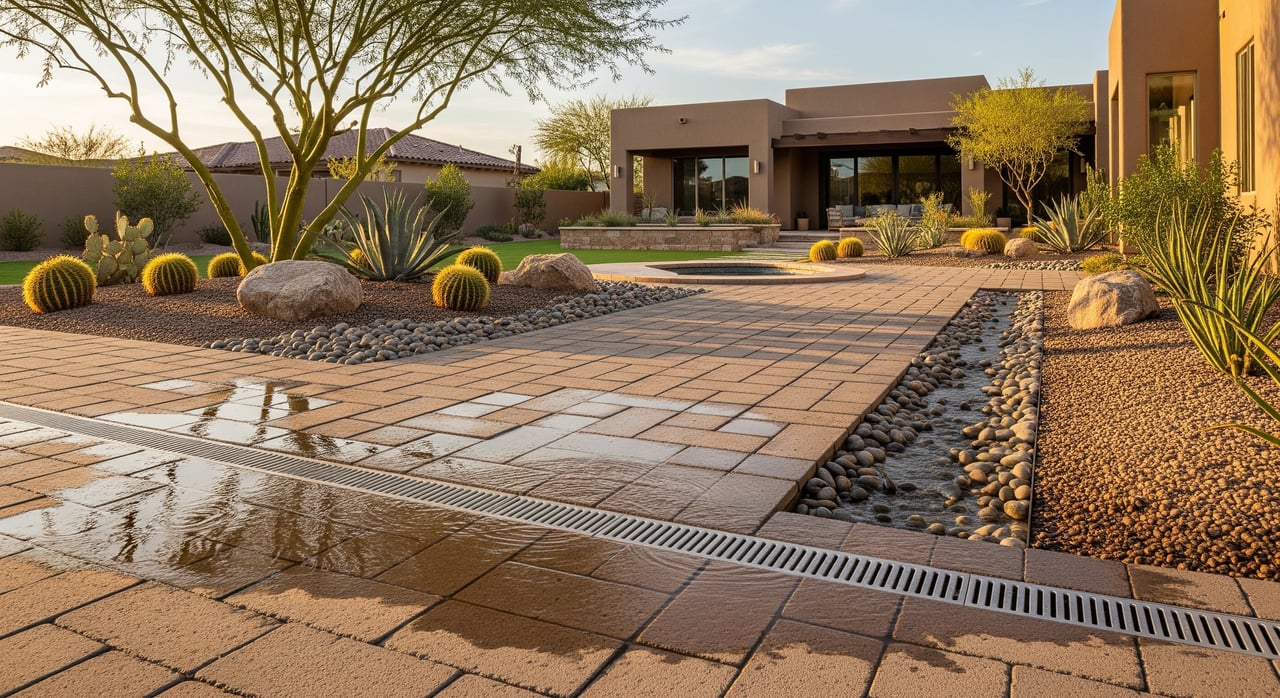
Shallow swales or catch basins can move water to an approved discharge point or a percolation area at a lower part of the yard.
A gravel trench with a perforated pipe can intercept water and route it to an approved outlet. Design matters. The outlet must be legal and not create issues for neighbors.
These features store runoff and let it soak in slowly. In Maricopa County, certain discharges and dry wells may require permits. Read county guidance before planning one: Dry well and stormwater FAQs.
Projects that change drainage, install retention, or add certain paving work can trigger permits. Start with the City’s Private Development Engineering and Building Safety pages to confirm what your project needs: Tempe private development engineering. Work in mapped floodplains or washes may also require Maricopa County Floodplain approval.
Your flood zone affects mortgage and insurance requirements, but flooding can happen anywhere. Check your address in the FEMA Flood Map Service Center. Maricopa County Flood Control also provides local mapping and rainfall tools you can review when comparing neighborhoods.
Arizona requires sellers to disclose known material facts, which can include prior flooding, water intrusion, or drainage repairs. Learn more in the Arizona Department of Real Estate consumer resources: AZRE consumer info.
Local stormwater rules prohibit illicit discharges and harmful drainage changes. Make sure outlets are approved and that private drainage features are maintained. See county rules here: Maricopa County stormwater regulations.
Ready to talk through a specific Tempe property or prep your yard before listing? Reach out to Birk for neighborhood-level guidance and a clear plan to navigate drainage, disclosures, and value-impacting improvements.
Stay up to date on the latest real estate trends.
Real Estate
December Real Estate in The Lakes
November Real Estate in The Lakes
Real Estate
Get assistance in determining current property value, crafting a competitive offer, writing and negotiating a contract, and much more. Contact us today.